

Did you know? The Elbe cycle route is the most traveled bike trail in the country. It runs the whole length of the river, from its headwaters all the way to the North Sea. The section in the Czech Republic measures 370 km. One of the most beautiful stretches on the trail is the Elbe canyon north of Decin. The massive sandstone bluffs lining the Elbe River corridor make a magnificent backdrop. The trail runs right through the heart of Decin, so there are plenty of cafés along the way. As you peddle along, you can watch the climbers on the via ferrata and take in the boats plying the river. Decin Castle is a perfect place for a stop. Located directly above the bike trail it is one of the region's major landmarks. As the trail nears the German border, it enters Bohemian Switzerland National Park, where it is definitely worth taking a break for a side trip up to Pravcicka brana, the largest natural sandstone bridge on the continent. More information...
Did you know? Decin's swimming complex is a modern recreational facility with a natural thermal water source. It has both indoor and outdoor areas. The pool's thermal water source makes swimming outdoors possible year round. More infromation...
Did you know? The historic stone bridge spanning the Ploucnice not far from Decin Castle was built in 1564-1569 after a flood washed away the original structure in 1561. The sandstone bridge has four arches and is built in the late Gothic style with crenellated sides. It is 84 meters long, 4.8 meters wide, and rises 7.7 meters above the river. The sculptural grouping portraying St. John of Nepomuk, St. Vitus, and St. Wenceslas, with reliefs showing their deaths as martyrs, was done by M. J. Brokof in 1714. The structure is a protected landmark accessible only for pedestrians and cyclists. More information...
| Adress | Chrástecká ulice, Děčín |
| Webpage | www.zamekdecin.cz/web_en/?p=clanky/thun-chapel-of-saint-john-of-nepomuk&obr=8 |
| Popis |
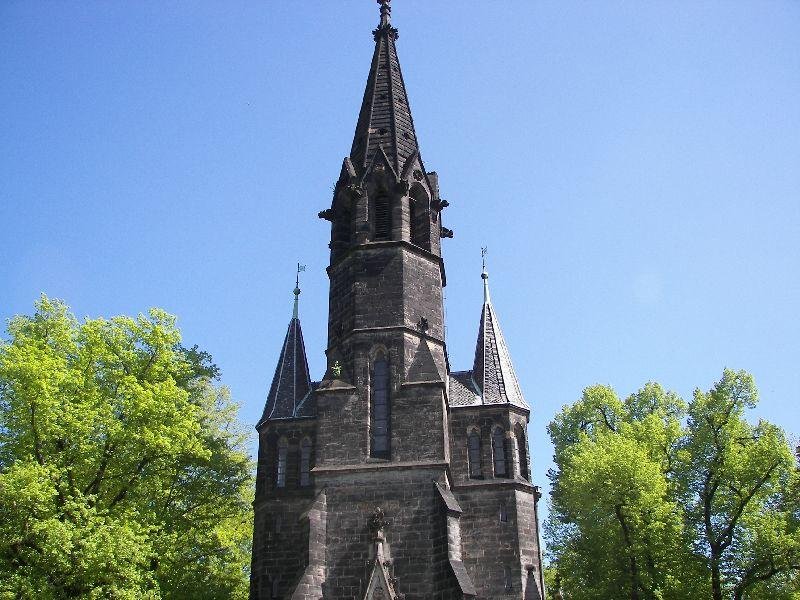
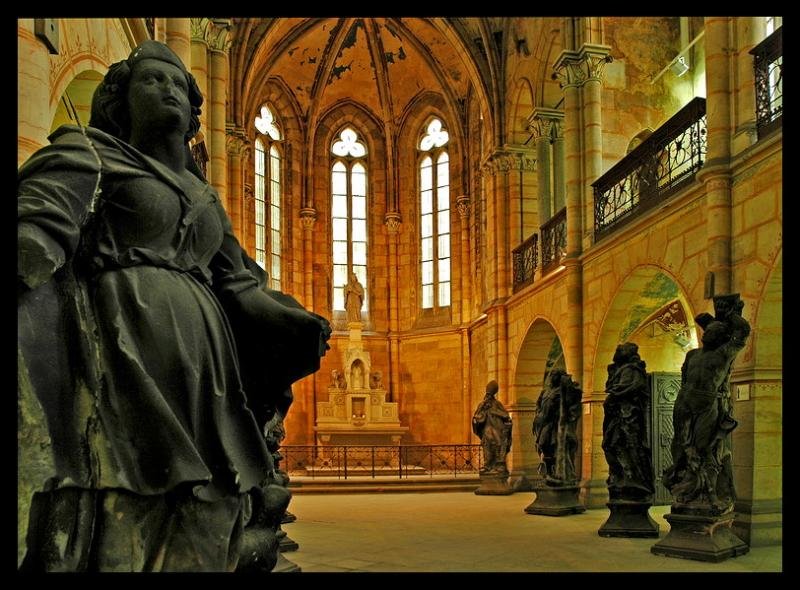
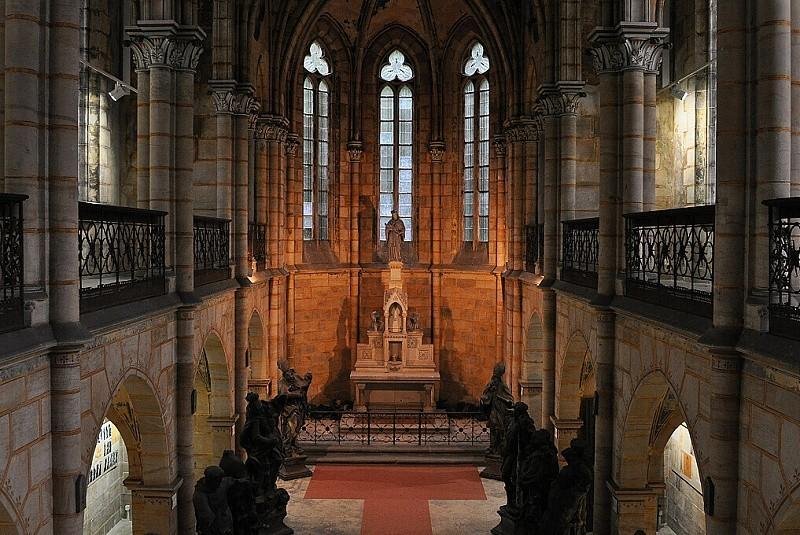
The site of today's neo-gothic Thun Chapel was originally occupied by a smaller baroque chapel, built here in 1723 at the initiative of the Rosbelesy congregation and its pastor Franz Johann Zinck. The chapel, however, fell into disuse and soon was open only on the holy days of its patron. In 1822 the property came into the possession of the Thun-Hohensteins, who decided to make it their family crypt. In 1870–1872 the original chapel was levelled and a neogothic structure raised in its place using a design by Viennese architect Friedrich Schmidt. Construction was supervised by Josef Mocker, who was then just beginning his career. Members of the Thun-Hohenstein family were buried here until 1935. In the years following the Second World War, the chapel fell into disrepair and became the increasing target of vandals. This state of affairs necessitated the exhumation of the remains and their relocation to the crypt at the Church of the Holy Cross. The baroque statues were moved inside. In 1998 a permanent exhibition of the history of the chapel was installed. |