


The city of Decin lies in a river valley where the Ploucnice and Jilove rivers join the flow of the great River Elbe, separating the Central Bohemian Uplands from the rocky clifflands of the Elbe Sandstones area. The Elbe forms the main axis of human settlement in the area.
Archeological findings on both banks of the Elbe - on Quaderberg, around Kamenicka and Riegrova streets and between Rozbelesy and Podmokly - indicate that the Decin lowlands have been inhabited since the La Tène era. Slavic settlement probably dates to the 7th century. The first written record of the existence of Decin is from the year 993 A.D. Settlement was concentrated around the old Elbe ford, which was an important commercial crossroads.
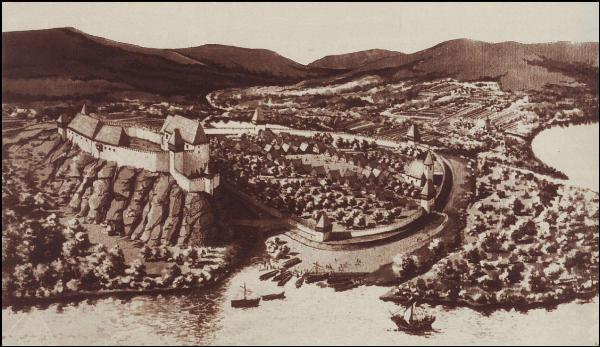
The original Premyslid fortress on the castle bluff, established to control of the Elbe waterway, was replaced in the early 13th century by a stone castle, under which, at the southern side of the bluff, Premysl Otakar II established the royal city of Decin. The town seal portrayed a royal lion, in silver, grappling a large fish (a barbel). Decin eventually came into the hands of the Markvartic dynasty, which colonized this area of northern Bohemia.
The Wartenbergs, a branch of the Markvartic line, made Decin their base of operations. In the early 14th century the royal city south of the castle bluff suffered several devastating floods and its populace was forced to relocate to the north side of the bluff, where the Wartenbergs had already established a settlement (roughly in the location of present-day Decin's main town square). This northern settlement took on the name and seal of the royal city, as well as its trade, transport, and fishing privileges.
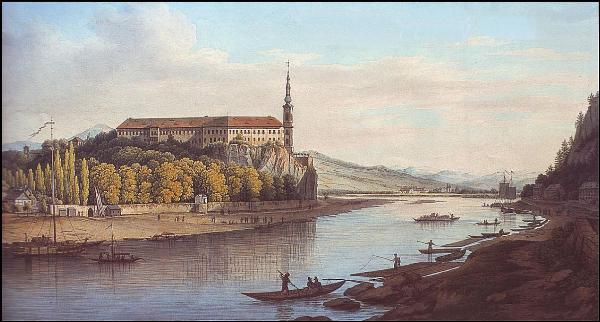
The early 15th century brought the Hussite battles and warring between the Wartenbergs and the League of Lusatian Cities. The city was razed repeatedly. In the course of the 16th and 17th centuries, the Decin estate changed hands several times going from the Wartenbergs to the Trckas of Lipa, then to the Saxon Salhausen clan, and finally to the knights of Bunau, under whose stewardship the city began to prosper. Trade channels on the Elbe were strengthened and guilds were established. The city had its own brickyard and quarries as well as dockyards and ferries, all of which filled the public purse. The burghers of Decin traded along the Elbe with Saxony, Hamburg, and other European states. The rejuvenated city began to spill out beyond its walls only to be stopped short by the Thirty Years War. With the re-Catholicization of the area, the Bunaus were forced to sell the Decin estate in 1628 to Christopher Simon Thun, an imperial officer. Decin remained in the hands of the Thun-Hohensteins until 1918. The Thirty Years War with its fires and plagues transformed the bustling city into a small and insignificant hamlet. After the war, repairs were made to the castle, making it a magnificent Baroque palace.
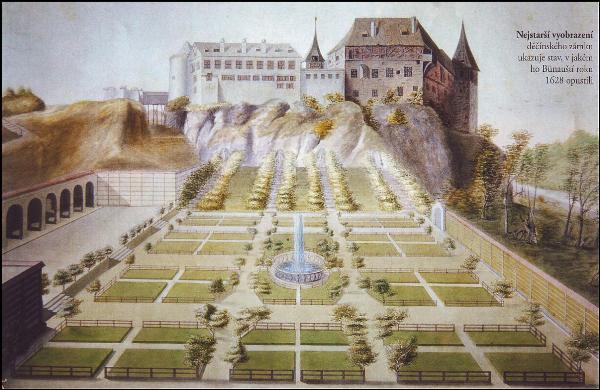
Development picked up again towards the end of the 18th century, when Decin lost its status as a military fortress. The castle gained its current Classical appearance and the town rebuilt its battle-ravaged Elbe trade routes. With the construction of the Prague-Dresden rail line in 1851 and the launch of regular steamboat service on the Elbe, the area embarked upon rapid industrial development, especially around the left-bank settlement of Podmokly. Excellent transport infrastructure - with new roads, the Elbe waterway, and the railroad - made Decin and Podmokly a major crossroads and industrial center for the region and beyond. The Thun estates in Podmokly filled with new factories and housing was built to accommodate workers and their families. The sleepy hamlet of Podmokly grew in the years 1890 to 1914 into a bustling town of 20,000 (and was chartered as a city in 1901).
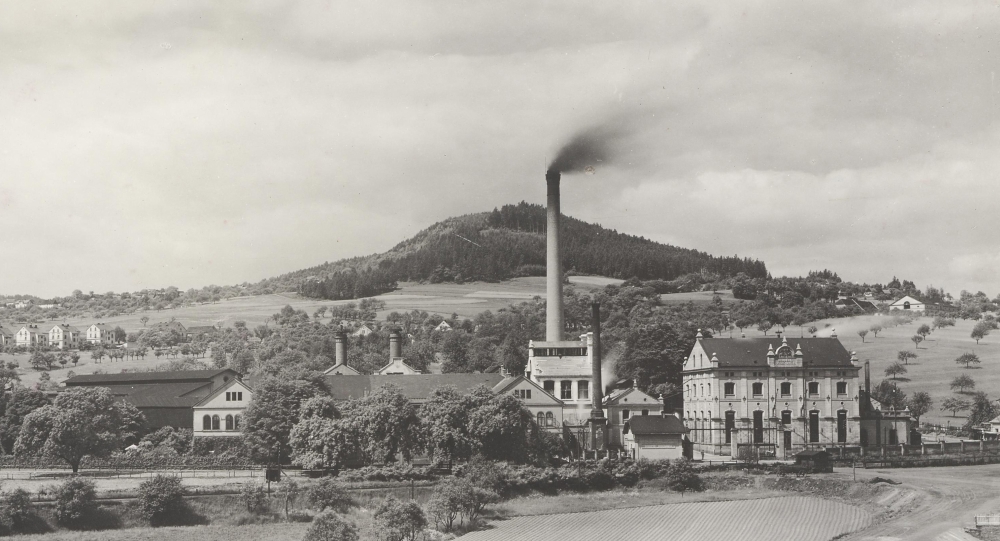
Development continued on both sides of the river up until 1942, when Decin-Podmokly was merged with Old Town to make a single city bearing the name Decin and using its historical town seal. After 1945, the city absorbed numerous surrounding villages (Rozbelesy, Chrochvice, Zelenice, Vilsnice, Bynov, Bela, Boletice, Nebocady, Breziny) and today it has a total of 35 districts. In the 1960s parts of the historic heart of the city were submitted to a ham-fisted demolition and many original buildings were replaced by pre-fabricated housing. The importance of transport along the Elbe was underpinned by the transfer of the waterways authority headquarters to Decin. A new dockyard in Loubi combined with the railway to ensure that the area remain an important transport center as well as an established industrial behemoth.
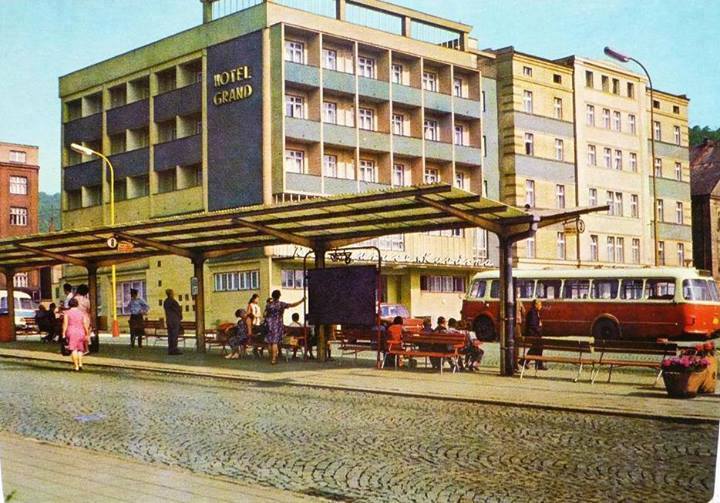
The Velvet Revolution in 1989 brought changes for the city. Run-down apartment buildings received facelifts and a tourism infrastructure slowly began to emerge. When the Soviet Army left Decin Castle, work began on repairing the damage done to the building and grounds. On the other hand, the sharp drop in manufacturing and machine work (Diana, Benar, Wico, Desta) brought unemployment. The situation was exacerbated by the limits of water traffic on the Elbe. The situation has improved in recent years as surviving companies expand and may see an upswing if projects to develop the Elbe waterways take off, making the river navigable year-round.
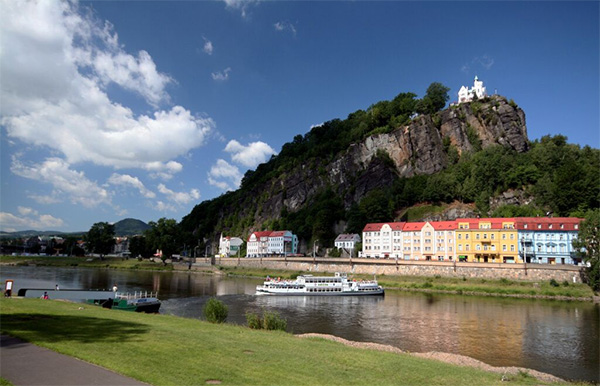
Decin is a base for tourists visiting the romantic Bohemian Switzerland area and is an ideal jumping off point for recreation in the German border areas as well.
Tourists and visitors are drawn to the area by its fantastic natural beauty. Decin is blessed with an abundance of unique natural landmarks.
Decin Superlatives
The biggest sandstone canyon in Europe
The Elbe River Canyon
The largest natural stone bridge in Europe
Pravcicka Brana
The lowest elevation in the country
115 meters above sea level at Hrensko, where the Elbe flows out of Bohemia
The highest plateau in the country
Decinsky Sneznik (723 meters above sea level)
The oldest stone observation tower in Bohemia
The tower on Decinsky Sneznik (built in 1864)
The oldest steel arch bridge in Bohemia
Tyrs Bridge in Decin (built in 1933)
The oldest suspension bridge still in place
The footbridge under the castle (1831)
The highest concrete structure in Bohemia
The broadcast tower on Bukova Hora (683 meters above sea level, 223 meters tall)